Chicopee school transportation, FY2027

$14.65 million
a year on buses.

Double
what we spent
in 2018.

Introducing

The School
Efficiency Order.

Shorter routes. Neighborhood schools. Fuller buildings. The goal: up to $5 million saved every year, without cutting a single teacher or raising taxes.

The cost

Not sustainable.

FY2018
$7.29M
100%increase in less than a decade
~8%growth per year, not 50%
$3.74M → $9M+special-education transportation

Per student, per day

Millions are hard to picture. Here's one ride.

$20.49

What Chicopee pays, on average, to bus one student to school and back for one day. Every student who needs a ride will keep it. This is about whether we're paying a fair price for it.

$20.49per school day
$102per school week
$3,689per student, per year

Same ride, different price.

The state calculates every district's average cost per student for all transportation inside the district, using the same method for each city.

6thhighest of the 40 districts the state lists
2.5×the middle (median) district
+29%Chicopee's rate in two years (FY24 to FY26)

A higher number isn't automatically wrong. Geography, route design, and how many students ride can all raise a district's average. That's why it deserves a careful second look before anyone draws a conclusion. Source: Mass. DESE District Transportation Rates (FY24, FY25, FY26). Per day = annual rate ÷ 180 school days.

The goal.

$5Mevery year.
$25Mover five years.
$50Mover ten years.

Money Chicopee could put back into:

  • Roads
  • Sidewalks
  • Parks
  • Infrastructure
  • Schools
  • Capital projects
  • The stabilization fund

It is a goal, not a predetermined conclusion. The order asks for an independent audit; the numbers decide.

How we get there

Where $5 million could come from.

$5 million is about a third of the $14.65 million bus bill. Here is why that target is realistic, and the four places an independent audit would look.

Is $5 million realistic?

Pick a yardstick. See what Chicopee would save on buses alone.

$4.9Ma year

Rough estimates. Rates come from the state's average cost per student; we apply the gap to the whole $14.65M transportation budget. Inflation uses the U.S. Consumer Price Index, 2018 to August 2026 (+33.4%).

Four places to look.

01

Shorter routes, closer schools

Children on Fairview Avenue ride about 5.7 miles to Litwin School when Bowe School is about a mile away. Fewer miles means fewer buses and drivers. Every student still gets a ride.

Boston redesigned its bus routes with MIT researchers, ran 50 fewer buses, and saved about $5 million a year. (PNAS, 2019)
02

A bus contract with real competition

A colleague who served on the School Committee said our bus contract draws only two or three bidders and called it "a monopoly." Less competition usually means higher prices.

The state Inspector General found 67% of districts got zero or one bid, and recommends bidding early, teaming up with neighboring towns, and requiring vendors to show their costs. (Mass. Inspector General)

03

Smarter bell schedules

When schools start at staggered times, one bus can run two or three routes each morning instead of one. Same students, same service, fewer buses sitting idle.

The researchers who redesigned Boston's routes found that adjusting bell times could cut the fleet by another 15%. (PNAS, 2019)

04

Fuller buildings

Some schools are not even half full. Combining two underused buildings saves a whole building's heating, utilities, maintenance and overhead, plus the bus routes that serve it.

Chicopee has done this before. The former Kirby School became housing and went back on the tax rolls.

Money already on the table.

State grant · February 26, 2026

$2,390,000

Awarded to Student Transportation of America for Chicopee Public Schools to convert part of the bus fleet to electric. (MassCEC)

What I’m asking

  • How many buses will it buy, and when will they run?
  • What is the full cost, including chargers, electricity and maintenance?
  • Will it lower what Chicopee pays on the bus contract?
  • A 10-year cost comparison of diesel versus electric.

The grant covers part of the fleet, not all of it (The Reminder). The test is whether it saves taxpayers money, not just the contractor.

More is available now: MassCEC’s Round 5 offers up to $2 million per application through January 29, 2027, and its advisory services provide free fleet planning.

These are yardsticks, not promises. The order asks for an independent audit to find the real number, with timelines and options. Final decisions stay with the School Committee.

Independent audit

This has to be done by an independent audit.

The review of routes, bus contracts, enrollment and buildings must be carried out by an independent auditor with no stake in the outcome. Not the City Council. Not the School Department reviewing itself. An outside, impartial look is the only way every parent and taxpayer can trust the numbers.

  • Impartial. No side grades its own work.
  • Fact-based. Every route, contract and building is measured the same way.
  • Trusted. One set of facts for the School Committee, the Council and the public.

The plan

Two budgets.
This order touches one.

When colleagues said "our hands are tied," they were talking about the wrong budget. Tap each card to see the law.

Saving money on transportation takes nothing out of a classroom.

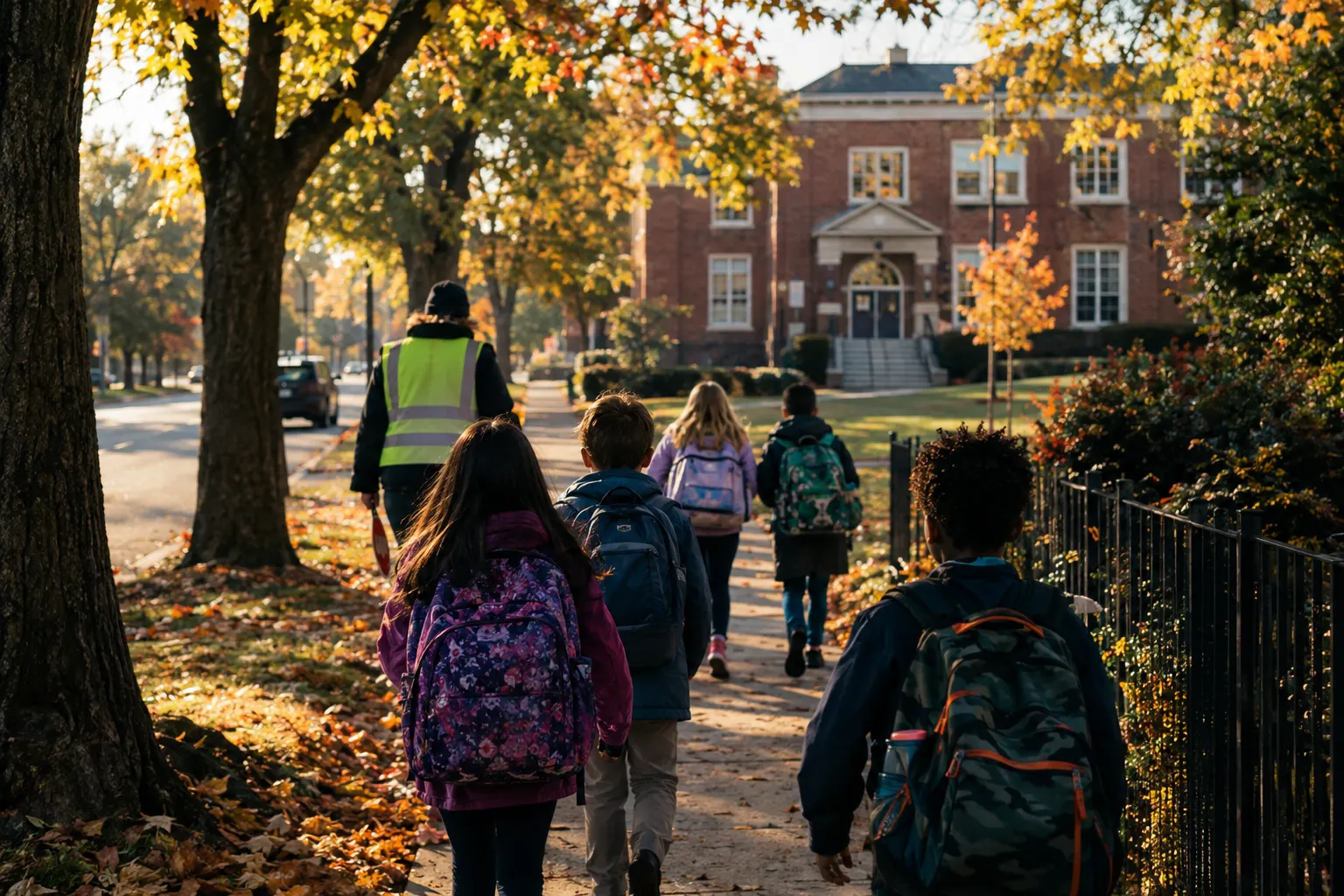
Illustration: children with backpacks walking to a nearby neighborhood school

What efficiency looks like

Closer
to home.

Children on Fairview Avenue are bused across the city to Litwin School. Bowe School is about a mile from their homes.

Litwin Schoolabout 5.7 miles
Bowe Schoolabout 1 mile
Arrived

Schematic distance comparison, not a map. Sending them to Bowe still gives them a bus, just a shorter ride. Taxpayers pay for every extra mile.

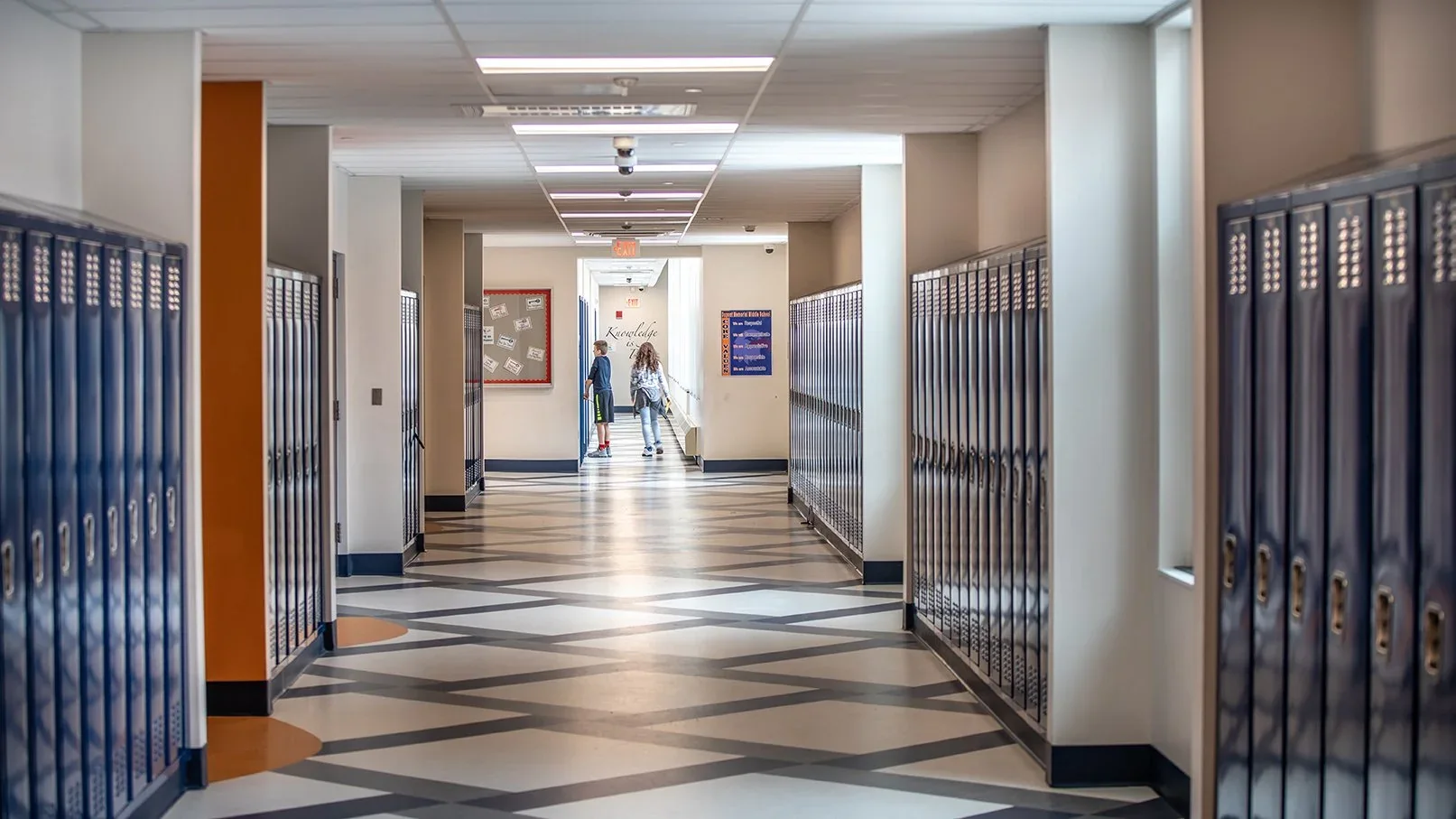
A quiet school hallway lined with blue lockers, with two students in the distance

Half-empty buildings

"I have walked through our schools."

Half full

Some buildings are not even half full.

Consolidation combines two underutilized schools into one building.

Combining a half-empty building with another saves an entire building's worth of:

  • 01Heating
  • 02Utilities
  • 03Maintenance
  • 04Overhead
  • 05The bus routes that serve it
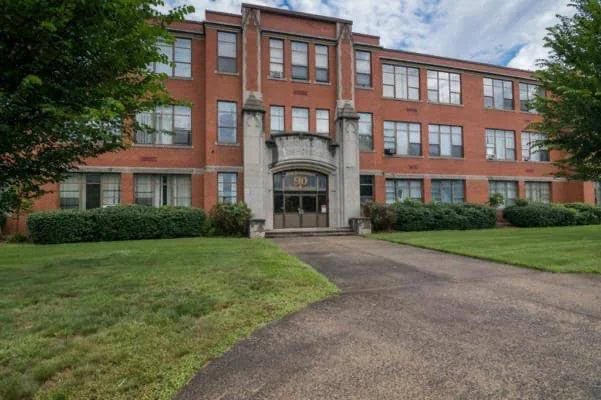
The former Kirby School in Chicopee, a three-story red-brick building, now apartments
Chicopee has done this before. When the Kirby School closed, the building became housing and went back on the tax rolls.The former Kirby School today.

Setting the record straight

Heard at the meeting.
Here's the record.

0 of 10 checked

"I could never vote for this"

And then they did.

Councilor Arriaga
"I do not support this at all. I will not vote for this."
YES on a joint meeting on redistricting
0minutes
Councilor McAuliffe
"There's 0% chance I could vote for it."
YES on his own amendment for a joint session
0minutes

The final version changed the wording of the order, not the subject. The disagreement was never about whether this conversation should happen. It was about how many words the order used.

See it for yourself

Don't take my word for it.
Watch the meeting.

Full meeting from ChicopeeTV on Vimeo. Every timestamp on this page points to this recording and was checked against its captions. Tap any moment to jump there. Open this moment on Vimeo ↗

The promise

What this order will never do.

Efficiency does not mean elimination. The review is about the structure around the people, not the people.

  • Cut teachers, paraprofessionals, custodians, or any school staff
  • Touch net school spending or the School Department's budget
  • Cut special-education services or transportation students are entitled to
  • Compromise student or staff safety
  • Eliminate after-school vouchers or rides to the Boys & Girls Club, YMCA, or other programs
  • Override the School Committee's legal authority
  • Lead to a Proposition 2½ override. I will never support one.
13–0

The Council voted unanimously for a joint meeting of the School Committee and City Council on redistricting. That is the partnership this order asked for, and I welcome it.

Before that meeting, I'm requesting

  • Building capacity versus enrollment for every school
  • How many students are bused outside their nearest school's neighborhood
  • The cost and mileage of every bus route
  • The operating cost of each school building

Let's make this decision together, with real numbers.

The School Committee and the City Council, at the same table, working from the same facts. The joint meeting is also a chance for every parent and taxpayer to be heard. I'll share the date as soon as it is scheduled.

  • Let's protect our students.
  • Let's support and protect our educators.
  • Let's look honestly at the numbers.
  • Let's examine our buildings, transportation, enrollment, and boundaries.
Read my full remarks to the CouncilNovember 5, 2026 · about 5 minutes

Colleagues, members of the School Committee, school employees, parents, and taxpayers of Chicopee:

I would like to take a moment to briefly clarify what the order consists of, and what it does not.

The City Council's effort through this order is not an attempt to interfere with the operations of the School Department, to draw any attendance boundary policies, or to take away any resources from our students or educators.

This order simply asks the School Committee, Superintendent, and School Department to undertake a comprehensive review of the following: enrollment, school boundaries, building utilization, transportation, and any consolidation opportunities. We ask that these be evaluated, and that any resulting short-term and long-term costs be considered.

The reason is simple: our current transportation trend is not sustainable.

In Fiscal Year 2018, Chicopee spent approximately $7.29 million on school transportation. In the Fiscal Year 2027 budget, we anticipate costs of approximately $14.65 million. That is a 100 percent increase in these expenses alone in less than a decade.

Transportation for our special-education students is designed and built for specific purposes. As these highly functional vehicles have become more complex, their costs have risen. These costs were once approximately $3.74 million; they have now grown to more than $9 million. I want to be very clear about what that number means. We have a population of special-education students who need customized instruction, and their parents rely on us.

Our students deserve every service, accommodation, transportation option, and educational opportunity to which they are entitled. Our responsibility is to determine how we can provide these services in the most efficient and sustainable way.

It is important that everyone knows this is not about balancing the budget on the backs of our teachers, paraprofessionals, administrators, custodians, or other school employees. Our educators and staff are the unfailing individuals delivering care with special regard, and they are the mentors who provide dedicated services to our children every day.

What I want to examine is the structure around the people, not the individuals: the transportation, buildings, boundaries, routes, duplication of effort, and overhead.

We must also consider Chicopee's larger financial future, for the greater good. Our ability to raise property taxes is not unlimited, and I want to be proactive before taxpayers are ever told that higher taxes are the only solution.

Be it known: I would never support a Proposition 2½ override (a vote to raise property taxes beyond the legal limit) to solve problems that we have the ability to address through responsible planning, restructuring, and efficiencies. I would rather make responsible decisions today than ask taxpayers for more money tomorrow.

That is why I would like this process to be pursued with a goal of $5 million in sustainable annual savings through these efficiencies. This figure is a goal, not a predetermined conclusion.

If we can responsibly achieve these savings through better transportation routing, improved use of our buildings, appropriate consolidation, and other operational reforms, we can achieve savings of $25 million over five years and $50 million over ten years. This gives Chicopee a greater ability to invest in roads, sidewalks, parks, infrastructure, capital projects, and our very important stabilization fund (the City's savings account for emergencies and future needs).

We also need to examine whether some students might be able to attend schools closer to their own neighborhoods. If we have an under-enrolled building, and children are being transported across the city while appropriate capacity exists closer to home, we should study whether there is a better way.

Any change must protect class sizes, educational programming, special-education services, student safety, and the quality of education our children receive.

Legally, our roles are clear. Massachusetts General Laws Chapter 71, Section 37 places educational policy authority with the School Committee. The Council is not looking to usurp that authority in any way. We are asking for an independent, comprehensive review with the support of the School Committee and School Department, one that offers options, identifies potential savings, establishes timelines, and works collaboratively with us. Final decisions regarding attendance boundaries and implementation remain with the School Committee under Massachusetts law.

And I would like to speak directly to our colleagues in the School Department and on the School Committee:

When you asked the City Council for support, we listened and provided that support. When our schools needed investments and appropriations, we worked with you and provided funding where needed.

Now it is we who are asking you to work with us.

This will be the City Council partnering with the School Committee. This will be Chicopee working together.

Let's protect our students.
Let's support and protect our educators.
Let's look honestly at the numbers.
Let's examine our buildings, transportation system, enrollment, and boundaries.

And let's find efficiencies in the system around our classrooms, so we can protect both the quality of education in Chicopee and the taxpayers who make that education possible.

Councilor Samuel R. Shumsky
Ward 6, Chicopee City Council

Chicopee, working together.